.png)
TSR's 2024 Preseason D1 XC Top 25 Team Rankings (Men): #22 Montana State Bobcats


NOTE: Earlier this summer, The Stride Report reached out to nearly every team that was considered for a possible ranking this summer. While we did receive numerous responses and great clarity, we did not get a 100% response rate. On certain occasions, we are referencing TFFRS in order to talk about returners and athletes who are out of eligibility.
Click here to read up our TSR #23 team, Michigan State
One of the more pleasant surprises in the NCAA cross country scene over the last few years has been the rise of the Montana State men. After Coach Lyle Weese took over the program's Director role in 2018, it didn't take long for the Bobcats to rise to national prominence.
After a shockingly strong end to last year's cross country campaign, the Montana State men find themselves in a unique spot going into 2024.
The Bobcats lose their lone All-American ace from last fall, but they return everyone else. Many of those returning men made great progress on the track this past spring, but there were also multiple moments last fall where Montana State struggled to find scoring cohesion.
Trying to accurately gauge the Montana State men going into this fall is admittedly a challenge. And yet, what we do know is that this team is still going to be a nationally competitive group that is impossible to shake at the meets that truly matter.
* * *
We'll be blunt, the start of Montana State's 2023 cross country season was...bad.
And frankly, "bad" may be a generous description.
That's because the Bobcats' first real test of last fall came at the Joe Piane Invitational. That was a nationally competitive meet that offered great competition, but there was still plenty of room for the Bozeman-based men to find success.
That, however, didn't happen.
While Ben Perrin (11th) and Owen Smith (15th) held their own, it was the rest of their squad that truthfully struggled. Matthew Richtman (50th) wasn't anywhere near his best form while Rob McManus (88th) and Levi Taylor (98th) were clearly capable of being so much better.
In the end, Montana State dropped to 9th place overall, losing to five teams that would eventually fail to qualify for the cross country national meet.
It was truthfully impossible to overlook that not-so-encouraging early-season result. That, however, may have also been the performance that made Montana State's effort at Pre-Nationals look so much better, comparatively.

On that stage, Richtman (12th) rebounded in a major way while Smith (14th) and Perrin (16th) were arguably just as good (and maybe even better) than they were in their prior outing. Truthfully, McManus (48th) and Sam Ells (51st) still had a gap between them and their teammates that needed to be covered. Even so, they did enough to keep the Bobcats within 25 points of a nationally competitive Virginia squad.
After a very predictable runner-up effort at the BIG Sky XC Championships, Montana State ventured to the Mountain regional meet. Once there, the objective was clear: Pull off at least one upset over a team that can "push" them into the national meet.
Sure enough, that was exactly what happened.
With the Bobcats' top-six finally coming together for a somewhat complete performance, Montana State secured 5th place and was eventually pushed into the national meet by 6th place Colorado. But make no mistake, Montana State wasn't just happy to be on the national stage -- they wanted to make a statement, too.
In what was easily their best performance of the season, the Bobcats were flat-out fantastic in Charlottesville, Virginia. Matthew Richtman (26th) had an outstanding All-American effort while Ben Perrin (53rd) offered valuable scoring potency as well.
With Owen Smith (72nd) coming through in a clutch manner and both Levi Taylor (138th) and Rob McManus (165th) doing enough to get by, the Montana State men ended their season with a spectacular 13th place team at the NCAA XC Championships.
* * *
Let's rip off the band-aid and get the bad news out of the way: Montana State loses Matthew Richtman from last year's squad. He was the team's lone All-American last fall and he offered a tremendous amount of scoring potency, steadily improving with each passing meet before peaking perfectly for the postseason.
We'll admit, last year's Montana State team dramatically outperformed expectations at last year's national meet. A large part of that was because Richtman was so incredibly clutch in his season finale.
Thankfully, everyone else from last year's squad is set to return. That includes Ben Perrin who has a real chance of being an All-American this fall. And yet, despite his scoring importance, he's one of the men who we are putting the least amount of attention into when evaluating this squad.
Compared to his fellow returning teammates, we feel confident in what we think we're going to see from Perrin this fall.
Owen Smith, meanwhile, was quietly great throughout 2023. The Montana State talent finished 15th at Joe Piane, 14th at Pre-Nationals and 72nd at the national meet in what turned out to be a very strong string of races. In theory, he could grow into the secondary lead scoring role that Perrin assumed last fall.
On paper, both Perrin and Smith give their team a solid core to work with and build around. As long as those two men replicate their performances from last year, then Montana State will have a better chance than not of being nationally competitive in some way, shape or form.
But while Perrin and Smith will establish the floor of success for this team in 2024, it's the supporting cast that will likely dictate just how high the Bobcats' ceiling will be come October and November.
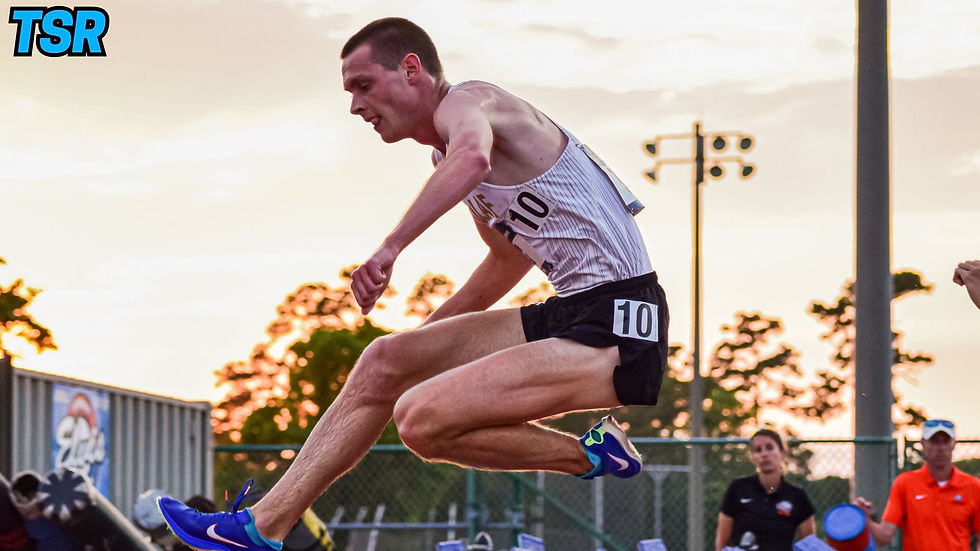
Levi Taylor and Rob McManus, as well as maybe Harvey Cramb and Sam Ells, have all proven to be names with a ton of great talent. The only catch is that their talent is best showcased on the track (specifically the steeplechase) rather than the grass.
Both McManus and Taylor were serviceable backend pieces for Montana State last fall, specifically in the postseason. And yet, their cross country performances paled in comparison to what they did over the barriers and water pits this past spring.

The former ran 8:29 in the steeplechase and qualified for the outdoor national meet. The latter ran 8:30 in the same event (his PR is 8:27) and advanced to the finals of the steeplechase at the NCAA Outdoor Championships.
In theory, both McManus and Taylor should have been significantly better on the grass than they were last year. While the steeplechase is by no means a proper gauge of how someone will fare during cross country, there is at least a baseline level of talent that should be translatable to the fall months.
It's hard to believe that neither McManus nor Taylor will be better in 2024 than they were last fall. And yet, it's not like this past spring was the first time that both men were nationally competitive steeplechasers, either. In theory, if they were going to make a jump, it was going to be on display last fall.
* * *
The scoring quartet of Perrin, Smith, McManus and Taylor will likely act as the focal core of this team in the coming months. If each of those men run up to (or close to) their full potential, then the Bobcats are almost certainly going to be better than this ranking suggests.
Of course, it takes five runners to close out a team's scoring group and it takes seven men to field a full varsity lineup. That's where Cramb, Ells and Will Kelly come into play.
Cramb is a fascinating name to monitor. While he was largely a non-factor on the grass last fall, that could end up changing in 2024. That's because Cramb had a highly encouraging year on the track, running times of 1:48 (800), 3:40 (1500) and 8:49 (steeple). He admittedly didn't do much beyond the 3000-meter distance, but it's undeniable that he's more fit now than he was last year.
The only question is...by how much?
It's a somewhat similar story for Ells who ran times of 8:57 (steeple) and 14:01 (5k) on the track earlier this year. Sure, those times aren't going to spark any major headlines, but for someone who was just a sophomore last year, those results felt like a good step in the right direction.
Finally, we have Will Kelly, yet another steeplechase standout. The now-former D3 runner transferred into Montana State from St. Olaf. And during his time with the Oles, Kelly showcased excellent talent, running 8:52 over the barriers and water pits before finishing 4th place in the finals of that event at the D3 outdoor national meet back in May.
Kelly is also a 26th place D3 cross country All-American, making him a great pickup for the Bobcats who can seemingly use his scoring value across all three seasons. Frankly, it would be surprising if the newest Montana State talent didn't emerge as a scorer for the Bozeman-based men at least once this fall.
* * *
As we were ranking Montana State, we wanted to find a spot in our top-25 that best reconciled the pros and cons surrounding this group.
On one hand, the Bobcats return almost everyone from their 2023 lineup and a small handful of men are almost certainly going to be better compared to last year. And yet, on the other hand, this team lost their most impactful scorer to expired eligibility. Not only that, but the national meet was a fairly obvious outlier in terms of how strong Montana State had been as a team last fall.
A TSR #22 ranking feels like a fair position for the Bobcats as it recognizes their potential, but also accounts for their glaring weak points seen over the last year. And truthfully, we don't know if this is the "correct" spot for Montana State, but it does feel like the "right" spot for them...if that makes any sense.
However, maybe the most important takeaway that we have about Montana State is the fact that this distance program, which was once an afterthought in the national dialogue of competitive cross country teams, now has some legitimate staying power based on just reputation.
And that, ladies and gentlemen, should tell you everything that you need to know about the overall direction of this program.


