.png)
2024 Nuttycombe First Thoughts (Part One): BYU Dominates, Washington Wins Short-Handed, Sadie Sigfstead Makes a Statement & Parker Wolfe Earns Comeback Victory


Well...that was exciting, huh? The Nuttycombe Invitational is all wrapped up and there is A TON to talk about. In fact, we have so many results to discuss that we're breaking our "First Thoughts" article in two parts. Part One is today and Part Two will (likely) come tomorrow.
Below, we broke down the performances of each team from the Nuttycombe Invite and even dive into the individual battles as well. Let's dive in, shall we?
Men's Analysis
Individual Race
Alright, honesty hour...who thought Iowa state's Robin Kwemoi Bera was going to run away with the win?
We knew that Iowa State's newest low-stick had come into the NCAA with a rumored 5k PR of 13:58 that was supposedly run at 7000 feet of altitude. Even so, we had no idea how legitimate that mark was and it wasn't entirely clear how he would translate that kind of effort to the NCAA scene over 8000 meters on the grass.
There is still a lot for Bera to learn as his ultra-aggressive racing strategy came back to hurt him on Friday, ultimately fading to 5th place. However, a bit more refinement in his approach could make him far more dangerous in the future.
Of course, at the end of the day, it was Parker Wolfe who secured the win. And while nothing about Wolfe's win was unexpected, it did show us that he is plenty capable of eventually beating Graham Blanks and winning the national title this fall (something that many of us already figured he could do).

How about Rocky Hansen (2nd) and Liam Murphy (3rd)? Those guys were outstanding. The former continues to be elite on the grass and he may even be a future national title winner. Murphy, meanwhile, looks aerobically stronger than he was last year. Could he be a top-five name in the NCAA this fall?
I don't have too much to say about Casey Clinger (4th), but it's good to see that he's still as strong as ever. He'll be another name in contention for a top-five finish at this year's national meet.
1. BYU Cougars (44 points)
Uh...surprise?
The BYU men were heavily favored to win this race as long as they ran a full lineup. And sure enough, they did just that. You could argue that there isn't another team in the NCAA that is better at pack-running than the Cougars are.
Casey Clinger (4th) was unsurprisingly great and you could say the same thing about Joey Nokes (6th) and Creed Thompson (8th). However, maybe the most exciting development was seeing Aidan Troutner (9th) have what may have been the best cross country race of his career.
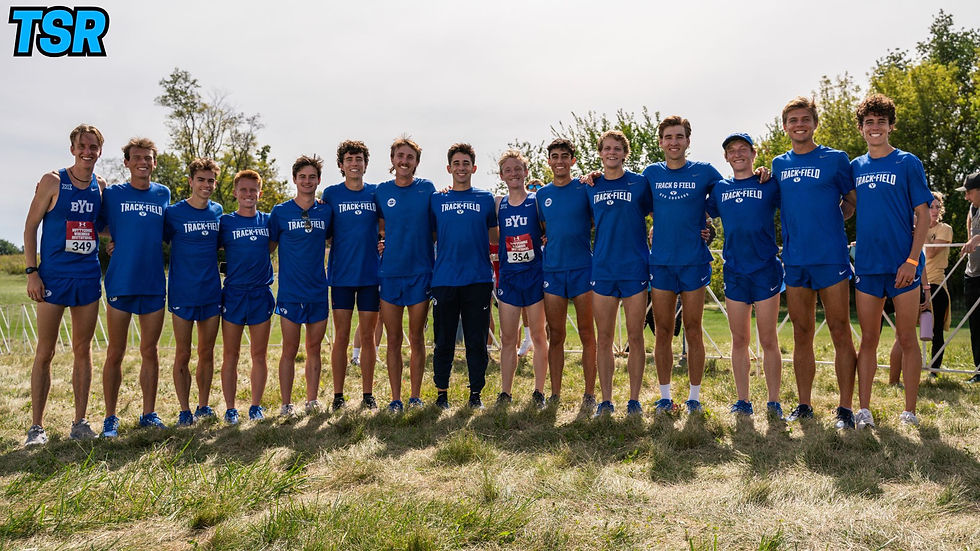
Seeing Troutner evolve into a low-stick is huge for a BYU team that feels like the only legitimate threat to Oklahoma State's title chances this fall. And, of course, the depth on this team was phenomenal. Olympian James Corrigan snagged a very strong 17th place finish to close out the scoring while Jacob Stafford (21st) had one of the most underrated performances of anyone in this field.
We didn't exactly learn anything new about this team, but they did further solidify themselves as the biggest threats to the Cowboys' hopes for NCAA gold.
2. Iowa State Cyclones (108 points)
I'll admit, I wasn't expecting a whole lot out of Robin Kwemoi Bera going into this weekend. Yes, his 13:58 (5k) PR at 7000 feet of altitude was incredible, but trying to translate that upper-tier mark to an 8000-meter racing distance on the grass against a loaded NCAA field is incredibly challenging.
Even so, a massive 5th place finish gave the Cyclones a potent low-stick result to pair with a very strong 19th place finish from veteran Said Mechaal. However, arguably the most important development of the day for the Cyclones was that Silas Winders (22nd) grabbed a low-stick result of his own while Gable Sieperda (29th) had one of the best early-season cross country performances of his career.

Devan Kipyego (33rd) was a very pleasant surprise, offering outstanding scoring value in his own right. But the craziest part of all is that Kipyego may not even be a scorer for Iowa State by the end of the season! Top-half All-American Sanele Masondo didn't race on Friday nor did 8:22 steeplechaser, Joash Ruto.
If we're assuming that those latter two men will race later this fall (and be in top form), then the Cyclones are actually much closer to BYU than these Nuttycombe results would lead you to believe.
3. Wake Forest Demon Deacons (150 points)
Friday was the perfect example as to why we were higher on Wake Forest than most people were. The upside of this team came through in a massive way and their firepower looked far more potent than it did at any point last fall.
Rocky Hansen (2nd) looked better than he ever has (which is saying a lot) and may be a top-10 name in the NCAA right now. However, the more important development was seeing 2022 All-American Luke Tewalt snag a monster 10th place finish! After struggling greatly for the last year or so, the Wake Forest veteran finally looks like he's back in top form.

Charlie Sprott (31st) and Aidan Ross (36th) both had sneaky-good races, especially the latter, to offer tremendous scoring stability. With Daniel Winter (71st) closing out the team's scoring reasonably quickly, it was hard to dislike anything about the Demon Deacons' performance on Friday.
We should note that this team didn't field Joseph O'Brien, their second scorer from last fall. Had he run, then he is likely finishing alongside Sprott and Ross, effectively cutting off a large chunk of points from Wake Forest's team score.
Expect this group to be listed in the top-10 portion of our team rankings during our next update.
4. North Carolina Tar Heels (196 points)
This was about as good of a performance as we could have reasonably asked out of the North Carolina men. The duo of Parker Wolfe (1st) and Ethan Strand (7th) were unsurprisingly elite, but it was clear that this group needed a third low-stick if they wanted to come close to replicating last year's success.
Initially, we thought that third low-stick could be Max Murphy, a graduate transfer from Iowa. But instead, it was returning veteran Colton Sands who had a HUGE day, placing 24th overall in what could be argued as a low-stick result.

The rise of Sands as a potent lead scorer for UNC is massive, especially with the depth of this team looking a bit better than it was last year.
Yes, we'll admit, there was a fairly large gap in front of Will Coogan (72nd), Patrick Anderson (92nd) and Max Murphy (94th). Even so, that backend group was better than anything that the Tar Heels were able to produce last year and we're confident that Murphy can improve for future races.
If I'm Coach Chris Miltenberg, I'm feeling pretty good about the status of my team right now.
5. Washington Huskies (246 points)
Last year, the Washington men placed a dreaded 27th place at the (slightly more stacked) Nuttycombe Invite and failed to qualify for the NCAA XC Championships.
But in 2024, the Huskies just secured a top-five finish in what will likely be the third-most competitive meet of the entire season.
The Washington men were excellent on Friday, although they put together a competitive lineup in a way that I wasn't expecting. Tyrone Gorze (27th) and Leo Daschbach (28th) both delivered on the pedigree seen by their high school resumes...except Gorze is a sophomore and Daschbach is a veteran. Even so, those two offered great scoring value as did Nathan Green (45th) who returned to racing earlier than I thought he would.

Evan Jenkins (67th) didn't have his best day. In fact, I thought he could have been a top-20 name. Evens so, with Rhys Hammond (79th) closing out the scoring fairly quickly, you had to commend the Huskies for putting together a complete and balanced lineup.
Keep in mind that true freshman Nathan Neil placed 3rd in the "B" race in a time of 24:22 which would have put him around 63rd place. Tack on expected improvements from Jenkins and you get a team that could have truly threatened UNC for 4th place.
Kudos to Coach Andy Powell. After a disastrous 2023 fall campaign, the start of their 2024 cross country season may have already secured them a spot to the national meet.
6. Michigan Wolverines (262 points)
Sometimes, you have to own up to your mistakes -- and for me, this is one of those times.
I just didn't believe in the Michigan men at all going into this season. I thought they were a relatively unexciting team last year and the loss of their two low-stick veterans (Tom Brady and Nick Foster) was almost certainly going to hold this team back in 2024.
But on Friday, the Wolverines sent a statement to The Stride Report and the rest of the country that they belonged amongst the best. Caleb Jarema (20th) gave his team a low-stick that I wasn't sure they would have this fall while Nathan Lopez (42nd) had what may have been the best performance of his still-young career.

However, arguably just as important were the performances of Luke Venhuizen (57th) and Trent McFarland (59th) who provided crucial scoring stability. Their middle-lineup presence was followed by Jack Spamer (84th) closing out the team's top-five fairly quickly.
To put it simply, the men of Big Blue put together a complete and balanced lineup on Friday. Nearly everyone in their top-five had the best cross country races of their careers. On paper, this team was supposed to take a step back from last year. However, it seems like the complete opposite has happened.
7. Eastern Kentucky Colonels (264 points)
At first glance, Eastern Kentucky's team performance doesn't really leave us with much to talk about. Justine Kipkoech (13th) was the low-stick that we thought he could be and while they didn't have anyone else in the top-40, the Colonels did have Tomas Vega, Mario Priego, Mohammed Jouhari and German Vega finish 49-51-73-78, respectively.
However, upon a deeper look, you'll find that Kristian Imroth, an 8:35 steeplechaser, wasn't a scorer for this team and that Taha Er Rouay didn't even race! The latter name was someone who I thought could have placed in the top-20 on a good day.

The Vega brothers and Priego were much better than I'd thought they'd be and the EKU men seemed to fare pretty well despite not being at full strength. I wasn't quite as high on this team as my fellow podcast co-host Ben Weisel was/is, but I may have to change my stance on Eastern Kentucky after this weekend.
8. Colorado Buffaloes (274 points)
I'll admit, I'm a bit torn about this result from the Colorado men.
On one hand, the Buffaloes seemingly fared better in this field than how the original members of this team would have. But on the other hand, Colorado finished one spot better at this same meet last year and they did so in a field that was slightly more competitive.
I also expected Colorado's firepower to be stronger on Friday. But at the same time, I was pleasantly surprised by the depth and completeness of their scoring group.
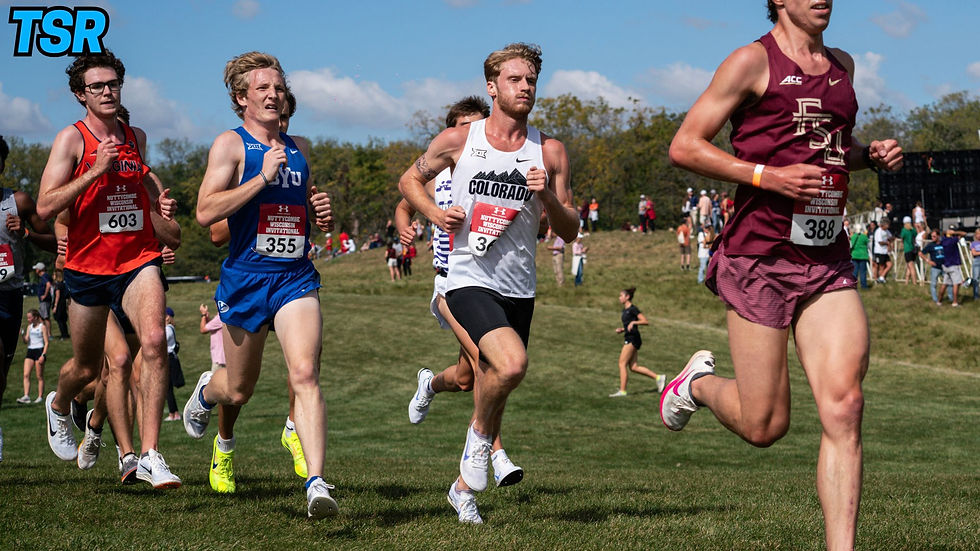
Isaiah Givens (30th) was a great lead scorer while Dean Casey, Kole Mathison, Simon Kelati and Anthony Monte went 55-58-65-66, respectively. Those latter four names are all capable of being slightly stronger, but it's also hard to critique a scoring group that was void of any major flaws.
For a race that took place in September, I thought this was a solid step in the right direction, although the Buffaloes are likely capable of being a bit better in the future.
9. Princeton Tigers (275 points)
I have to applaud the Princeton men. They lost a ton of crucial scoring options from last year's team including two highly valuable lead scorers in Connor Nisbet and Anthony Monte (as well as a few others). However, on Friday, the Tigers didn't seem to be hurt at all despite the losses of their two veteran standouts.
Myles Hogan (26th) just had a HUGE breakout race, providing his team with a great low-stick result. Jackson Shorten (43rd), meanwhile, was able to effectively translate his steeplechase success to the grass. Weston Brown (50th) was surprisingly great while Daniel O'Brien (53rd) was as stable and steady as he was last year.

Admittedly, there was a large gap between Princeton's top-four and their fifth scorer who placed 103rd overall. The good news, however, is that the Tigers' fifth man was Nicholas Bendtsen, someone who is a proven low-stick ace and an All-American from last fall.
If Bendtsen is able to return to top form and the rest of this team continues running like they just did, then I wouldn't totally count out Princeton from being a top-15 (or dare I say top-10) team this fall.
10. Villanova Wildcats (312 points)
Liam Murphy (3rd) was phenomenal and Marco Langon (12th) was a star-caliber low-stick just like we thought he could be. Of course, it was the rest of this lineup that left us scratching our heads as far as expectations go.
Bailey Habler (64th) overcame his rookie inexperience to offer a highly valuable middle-lineup result that stabilized this lineup. Veteran teammate Devon Comber (114th) did fade a bit, but with CJ Sullivan (119th) closing out the scoring relatively quickly, the Wildcats were able to salvage a 10th place result.

Depth is clearly going to be a major challenge for this team moving forward. Even so, having a top-tier scoring duo and a stable third scorer will at least keep Villanova fairly competitive in each of their outings. Their floor, however, is fairly low given that they have zero margin for error.
11. Virginia Cavaliers (313 points)
At first glance, this looks like a pretty underwhelming result for the Virginia men (and it is). However, when you realize that neither Nathan Mountain nor Will Daley ran for the Cavaliers, then you can begin to understand why this group fell outside of the top-10.
Thankfully, Will Anthony (15th) and Gary Martin (18th) were as good as we expected, providing their team with great low-stick scoring. However, a gap formed after those two men as Justin Wachtel, Jack Eliason and Adam Balewicz went 87-95-98, respectively, to close out the scoring.
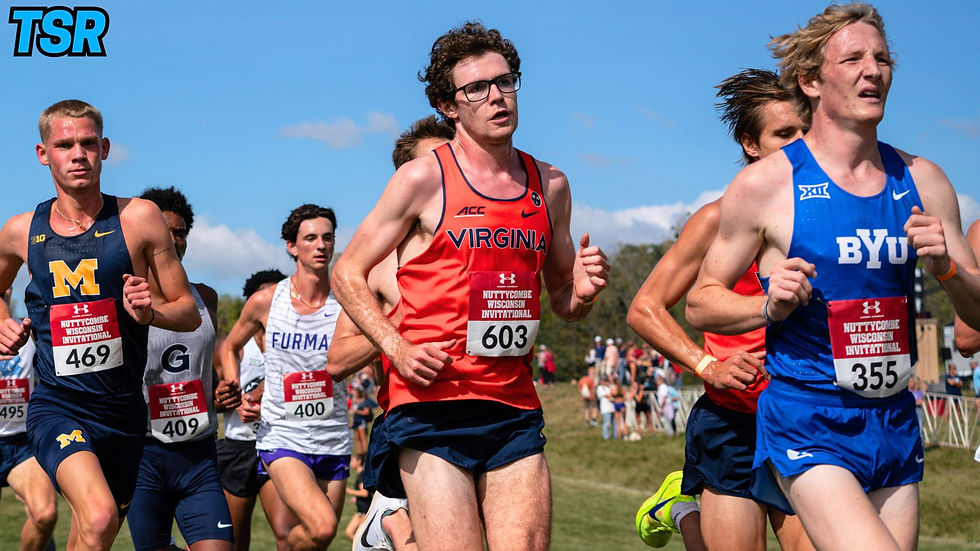
While the backend portion of this lineup wasn't quite as strong as we had hoped it would be, there are still positives to take away from these results. If Wachtel ends up being the team's fifth scorer when Mountain and Daley return (assuming they do), then his result from Friday is perfectly fine. We also have to commend Eliason and Balewicz for not letting the team score run away from them.
Sure, this wasn't the most encouraging performance from UVA, but it wasn't necessarily a terrible result, either, all things considered.
12. Syracuse Orange (325 points)
This was a good run for the Syracuse men. It wasn't necessarily great, but all things considered, I think they can walk away from the Nuttycombe Invite happy that they finished in the top-half of the field.
Assaf Harari (34th) had a fringe low-stick performance while Sam Lawler (47th) offered solid scoring value even if we thought he'd be better. Redshirt rookies Benne Anderson (60th) and Connor Ackley (75th) gave this team a pair of high-upside scorers who were able to bridge the two halves of this lineup. Ethan Wechsler (109th) closed out the Orange's top-five.

I did think Alex Comerford was going to be a top-80 finisher for this team and in that scenario, Syracuse is likely a top-10 team. Even so, this was roughly the result that we expected to see from the men of upstate New York.
Women's Analysis
Individual Race
I absolutely loved the aggressive pace-pushing that we saw from Gonzaga's Rosina Machu. That has often been an effective approach for her and she seemingly recognized that she could give that strategy a shot in this kind of field.
Machu did fade to 3rd place, although it was an appropriate risk that still paid off with an incredible performance.
But for as much as I loved Machu's decision to run hard from the gun, I loved Sadie Sigfstead's decision to shadow her even more. The Villanova star is a true aerobic-centric talent who is at her best when there is an aggressive pace -- something that she even said in a post-race interview.
Even so, I didn't expect her to pull away from Machu with relative ease and secure a resume-defining victory. That was a shockingly impressive win which absolutely felt like a breakthrough race.

Speaking of breakthrough races, Penn State's Florence Caron taking runner-up was a big-time result. She wasn't listed in our top-50 individual rankings, but we figured that she had the talent and potential to crack our list at some point this season.
However, we have to ask ourselves if Caron is a top-20 talent in the NCAA...right now. That is not a question that we thought we would be entertaining in late September.
Also, great runs from Columbia's Phoebe Anderson and Providence's Kimberley May who didn't relent despite the aggressive front-running and the gaps that formed in front of them.
1. Washington Huskies (110 points)
The winner of this race was going to be either Washington or Georgetown. And when I saw that the Huskies weren't fielding Sophie O'Sullivan or Samantha Tran, I gave the nod to the latter squad.
However, the Hoyas would end up not fielding their single-best runner, Chloe Scrimgeour, who was in the conversation to win the entire race. That, in turn, opened the door for the Huskies to secure the team title.
And sure enough, they did.
I'll admit, I was not at all expecting Maeve Stiles, a graduate transfer from Penn, to run as well as she did. Make no mistake, she has been a very talented name for a while who has had to battle through injuries in prior seasons. But to finish in 8th place in this kind of field was monumental for Washington.

Julia David-Smith, meanwhile, placed 12th to also produce an outstanding low-stick performance. She was building momentum earlier this year, but placing 12th certainly beat expectations. Amina Maatoug (27th) wasn't in top form, but still offered excellent scoring value while Chloe Foerster (29th) had a very strong day as well. With India Weir (34th) putting together an underrated performance of her own, it was hard to find a single flaw on this team.
The rise of Stiles and David-Smith as upper-echelon low-sticks is huge, especially for a team that can be even better in the future. It's best not to overreact to early-season results, but I'm getting awfully close to calling the Washington women locks for the podium this fall.
2. Utah Utes (139 points)
I was pretty high on the Utah women going into this season. Despite listing them at TSR #10 in our preseason rankings, I thought the Utes were actually under-ranked by us. And sure enough, Friday's race validated that suspicion.
After a breakout season over 1500 meters, Erin Vringer (6th) had the best race of her life, dropping a massive low-stick result. She wasn't even expected to be a top-three runner on her own team!

That unexpected boost in scoring potency was complemented by Mckaylie Caesar (21st), who mostly ran up to expectations, and Katarzyna Nowakowska (25th), someone who probably had the best race of her NCAA career. You could also argue the same thing about Morgan Jensen (33rd) who I actually believe could be even better moving forward. In fact, the same thing could be said about All-American Annastasia Peters (54th)!
The Utes flexed a ton of firepower on Friday and they left plenty of room for improvement. The rise of Erin Vringer as a low-stick is massive for the podium aspirations that this team likely has. They still need everyone to run well on the same day in order for that to happen, but the Nuttycombe Invite showed us that they are capable of doing exactly that.
3. Georgetown Hoyas (145 points)
I'm not entirely sure why people were ranking the Georgetown women outside of the top-10 in their preseason rankings. The Hoya just secured a massive 3rd place finish in the third-most competitive meet of the year without their superstar low-stick.
If Chloe Scrimgeour had run and finished in the top-five, then the Georgetown women win this race over a fellow podium threat in Washington (although, the Huskies didn't have one or two scorers of their own).
That's an encouraging development as long as Scrimgeour does return this season, although the simple fact that she was absent on Friday wasn't the most comforting sign.

Even so, Melissa Riggins (7th) and Lucy Jenks (14th) delivered on the highly potent low-stick scoring prowess that we knew both women held. Charlotte Tomkinson (32nd), despite being viewed as more of a middle distance runner, emerged as a scorer and would have been a fringe low-stick for a handful teams in this field.
With Barrett Justema (44th) having a breakout race of sorts and Almi Nerurkar (48th) adjusting quite well to the NCAA scene, the Georgetown women had a complete top-five with zero flaws. For a team that didn't have Scrimgeour, this was as good of a performance as you could have reasonably asked out of the Hoyas.
4. Providence Friars (180 points)
Kimberley May (5th) was outstanding, although given how incredible she's been over the last year, we're not exactly surprised. Shannon Flockhart (13th), however, made a huge jump as a cross country runner. We knew that she was a more-than-serviceable talent on the grass, but she had never proven to be a true low-stick ace until Friday.
Alex Millard (19th), meanwhile, gave the Friars some of the best firepower in the field with a third low-stick to rally around. Yes, gaps did begin to form after her, but Laura Mooney (58th) had an encouraging race after a challenging 2023 fall campaign.

Emily Bush (85th) did a respectable job of closing out the scoring while Cara Laverty (93rd) was nice scoring insurance. Of course, we can't overlook the fact that Kenzie Doyle did not race. This is someone who, at her very best, is capable of being an All-American. Or, at the very least, she can cut down on the backend gaps in Providence's lineup.
Simply put, the return of Doyle (at top form) could cut off a heavy chunk of points from the Friars' team score, inching them the slightest bit closer to the podium conversation.
5. Wisconsin Badgers (182 points)
I said before the race that the Wisconsin women were my sleeper team, but seeing them place 5th overall in this field certainly beat my expectations for them.
I'll admit, I thought the Badgers would have Lindsay Cunningham and Leane Willemse crack the top-20. But instead, this team reverted to their team-centric racing style as Shea Ruhly, Cunningham, Carolyn Shult, Annika Cutforth and Fiona McLoughlin went 30-31-36-38-47, respectively in the overall results.

The return of Ruhly, who seems to be in the best shape of her life right now, is massive for a Wisconsin team that may already have two other All-Americans. Shult and McLoughlin had the best possible races that we thought they could and Cutforth simply came out of nowhere to have a huge breakout performance.
All of this was done with Willemse having an "off" day. If she's in top form, then we're talking about the Badgers being a legitimate top-10 team, nationally.
Given the structure and personnel of this lineup, it feels impossible to envision this team having a poor outing. They have one of the highest floors in the NCAA along with some room to improve. Kudos on an admirable effort from the Badgers.
6. Furman Paladins (209 points)
If you had told me that the Furman women would place 6th in this race, I wouldn't have totally disagreed, but I would have also thought that it was a generous prediction. And of course, if that was going to happen, then I would have assumed that Bethany Graham had returned to top-tier form.
But instead, the Paladins placed 6th in this field with Graham never even toeing the line.
In what turned out to be one of the more stunning team performances of the weekend, the Furman women flexed better-than-expected firepower. Carley Wilkes (9th) was a very good runner coming into this season, but she now looks like an All-American lock after her breakout race. It's a slightly similar story for Kaylie Armitage (24th) who wasn't quite as potent as Wilkes, but still offered a fantastic low-stick effort of her own.

Sierra Bower (41st) and Jenna Mulhern (46th) delivered on the potential that we knew they had while Nicole Matysik (89th) had a fantastic race relative to expectations. Her long-term development has been absolutely brilliant.
This team clearly needed greater low-stick scoring throughout last fall. So instead of waiting for Bethany Graham to return, the Furman women took it upon themselves to refine their fitness in a substantial way.
Kudos to Coach Rita Gary. I don't know how she does it, but gosh, that was impressive.
7. North Carolina Tar Heels (235 points)
I said throughout last fall and in the early portion of this cross country season that the North Carolina women were a national-caliber team. Unfortunately, a flukey 2023 fall campaign made it seem that the Tar Heels weren't a strong cross country squad.
Of course, the UNC women came through on Friday and showed the country that they are still a formidable opponent. Brynn Brown (10th) returned to her low-stick form while Fatima Alanis (15th) picked up where she left off last year. That dose of firepower was complemented by a strong effort from Eva Klingbeil (49th).

Taryn Parks (71st) and Maddie Gardiner (90th) did enough for the UNC women to remain competitive with many of the top teams in this field. And while those gaps will need to be cut down in the future, this was still a highly encouraging step in the right direction for a team that had so much go wrong for them last fall.
8. Gonzaga Bulldogs (260 points)
I'll admit, I was surprised by how much I liked the Gonzaga women when I was writing our Nuttycombe Invite preview article. Yes, they had Rosina Machu, but their supporting cast of Logan Hofstee, Jessica Frydenlund, Willow Collins and Sadie Tuckwood all had better credentials than I had originally thought.
Sure enough, that same scoring contingent went 3-43-56-57-101, respectively, in the overall results at the Nuttycombe Invite.

Machu was outstanding and roughly as good as we expected, but Hofstee's rise as a high-impact freshman was huge. Yes, there was a significant backend gap, but Frydenlund and Collins did enough to stabilize this lineup so that the Bulldogs could salvage a strong result.
Sure, I thought the Gonzaga women had a shot of being nationally competitive this year, but I would have put all of my money on them finishing outside of the top-10 at this meet.
9. Oregon Ducks (264 points)
Throughout the summer and going into this weekend, I explained how the Oregon women were LOADED with talent. However, I also noted how there were a ton of questions remaining about numerous women on this team.
Even so, it would be unfair to look at the Ducks' result from Friday and use it as a legitimate indicator of how talented they are.

Yes, Mia Barnett (18th) did look like an awesome low-stick and Wilma Nielsen (35th) was much better than expected despite being an 800-meter runner. Even so, this team didn't field Maddy Elmore or Silan Ayyildiz on Friday, two All-American candidates. We also didn't see Dalia Frias race, either.
Anika Thompson (62nd), Charlotte Sinke (68th), Ali Ince (81st) and Samantha McDonnell (108th) showed us that the Oregon women are plenty deep this year. Of course, it's the health and availability of their two focal stars who will truly determine how far this team goes in 2024.
10. Penn State Nittany Lions (273 points)
I tried to tell you...
I was very high on the Penn State women coming into this season. I petitioned for them to crack our preseason team rankings (we listed them at TSR #25) and I chose them as one of my sleeper picks for this race. Sure enough, they came through.
The Nittany Lions had a highly successful outing in large part due to Florence Caron's jaw-dropping runner-up finish. That elite low-stick effort was complemented by middle distance specialist Hayley Kitching (34th) putting together a better-than-expected race of her own.

Sophia Toti (59th) and Madaline Ullom (63rd) were excellent stability scorers who were able to partially counter the drop-off to their fifth runner, Claire Daniels, who placed 113th (which, for her, was pretty solid).
This team is far from perfect and their depth still needs to be better. Even so, they have a very complete top-four and a truly lethal low-stick. My preseason prediction of the Penn State women being a top-15 team in our rankings at some point this fall is looking increasingly more realistic.
11. Virginia Cavaliers (304 points)
This is one of those results that looks more concerning than it really is.
As expected, Jenny Schilling (20th) delivered an awesome low-stick result, while sophomore Gillian Bushee (26th) made a huge jump to be a fringe low-stick talent in her own right! However, no other Virginia woman cracked the top-80, inflating the Cavaliers' team score to the point where they fell out of the top-10.
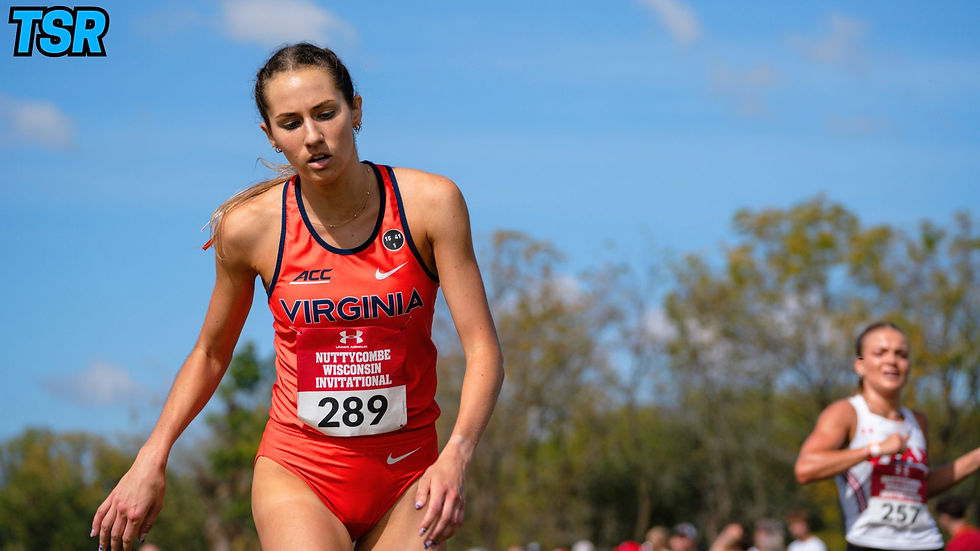
Of course, the absence of Margot Appleton forces us to put this result into perspective. Appleton, at her best, is a top-10 runner in this field. Had she been in their lineup, then Virginia would have scraped off roughly 70 points from their team score and finished near Furman.
Sure, UVA still needs the latter-half of their scoring contingent to close down on the gaps in front of them. Even so, I wouldn't panic too much about Virginia fading to 11th place on Friday.
12. Syracuse Orange (315 points)
In our meet preview, I said that, "...anything better than 12th or 13th place would likely be viewed as the Orange beating expectations." And, funny enough, they placed 12th overall.
Savannah Roark (22nd) looks closer to her 2022 form than her 2023 form which is a great sign if you're Syracuse. Behind her, the contingent of Jayden Harberts, Emma Eastman and Rylie Lusk mimicked much of the same scoring stability that we saw from this group last year by going 60-66-69, respectively, in the overall results.

Yes, there was a drop-off to the team's final scorer, but Olivia Joly (98th) and Madeline Heintz (100th) were decent enough backend options for what this team was trying to accomplish.
At the end of the day, Haberts and Eastman are going to be the women who make Syracuse a truly successful team in 2024. We know what we're getting out of everyone else, but those two women were quietly great and provided better-than-expected scoring value.


